Omron Automotive Electronics Italy (hereafter, A.E.I.), part of Omron’s Device & Module Solutions Company, is Omron’s only automotive parts manufacturing site in Italy and Europe. A.E.I.’s business, specializing in the manufacture of automotive relays and modules, spans a wide range of fields including design, product development, manufacturing of resin and metal parts to final products, design and automation of processing machinery (assembly and testing), sales, customer service, warehousing, and logistics. A.E.I. established its base in Alatri, Italy in 2004 and relocated to Frosinone in 2018. With about 150 employees, it manufactures parts for major automobile manufacturers in Europe and North Africa.
Watch in Video: Omron Automotive
Electronics Italy's Data Utilization Case Studies
Challenges
Achieving zero defects: Realizing real-time quality control using data analysis
To meet the high quality standards of the automotive industry, it is necessary to select technologies suitable for parts production, with a greater focus on production efficiency and process repeatability. Demands from automakers to keep defect rates from one in a million (ppm) to one in a billion (ppb) have been increasing year by year.
To address this, it is necessary to shift the quality control approach from sampling to 100% guarantee (full inspection). To provide 100% assurance at each stage, all data must be collected from each machine. A.E.I., which manufactures approximately 30 million parts annually for the global automotive market, faced the challenge of revising its manufacturing strategy and leveraging data analytics to smartly and in real time manage defects occurring in critical processes.
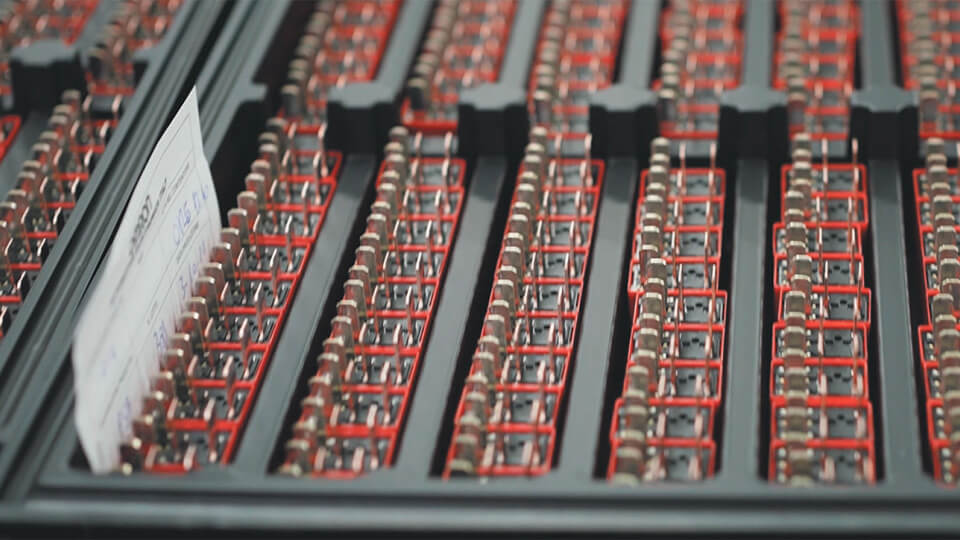
Production of automotive power relays that require higher quality assurance
Solution
Building a new quality management model with real-time analytics that are not influenced by operator subjectivity
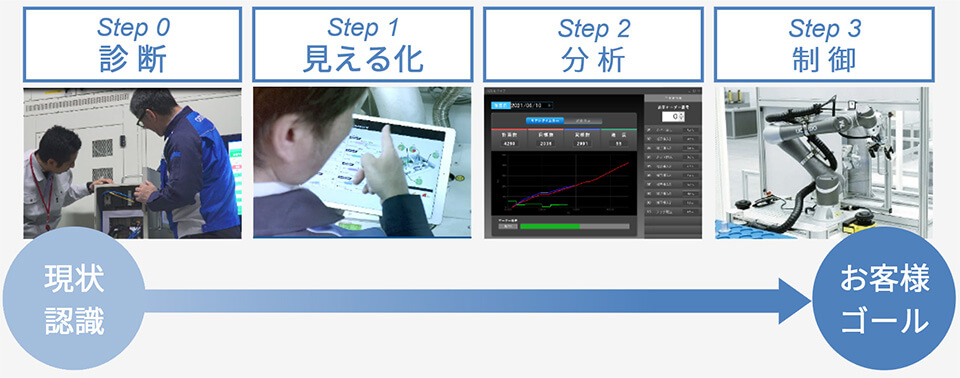
The first step in the strategic process review was the improvement of the power relay production line, which was implemented through the “Field Data Utilization Service i-BELT,” which covers all aspects of data acquisition and processing on machines provided by Omron’s Control Equipment Division.
Real-time measurement of clenching strength
The main reason A.E.I. decided to improve the relay production line was to eliminate inefficiencies that increased the risk of defective products occurring in batches, resulting in economic losses and the risk of defective parts reaching customers. With support from the i-BELT data services team, A.E.I. developed a new quality management model that is not influenced by the subjective judgment of operators conducting inspections at the final stage of the process. This model is based on real-time analysis by AI systems, eliminating the risk of human error or defective products reaching customers.
Engineers involved in improving the relay production line focused on the mechanical connection between resin and metal parts that make up the relay, known as the “came.” The skewer is the most important task in the assembly process and is also the most common cause for defective products to reach customers. Until now, the quality inspection of this scagging work, which requires meticulous care, has been conducted by operators, who have visually inspected the statistical data shown in the management plan to verify whether parts meet the specified shape.
However, when defects are identified, instead of collecting only the defective parts, we isolate the entire manufacturing batch and conduct a second inspection. Inspections are costly and time-consuming, and most manufacturing batches are discarded. Therefore, A.E.I. devised a new management system that can measure scaling force in real time.
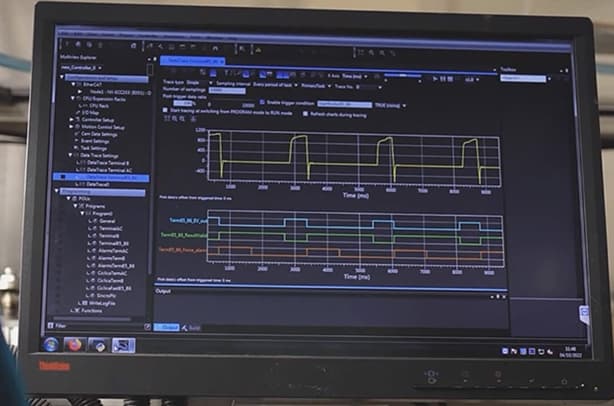
This management system was realized by integrating AI controllers (NY series) and components into existing processes, linking them with force sensors mounted on the line. This improvement enabled us to set thresholds and immediately stop the process when a joint failure occurred. As a result, operators were able to quickly take necessary measures for their processes, and A.E.I. achieved a 100% quality gate.
Real-time measurement of bristling strength
Data-driven processes
A.E.I.’s goal was to integrate Omron’s AI controller (NY series) into the process with “i-BELT,” meet quality standards, store manufacturing data, and manage the production history of parts.
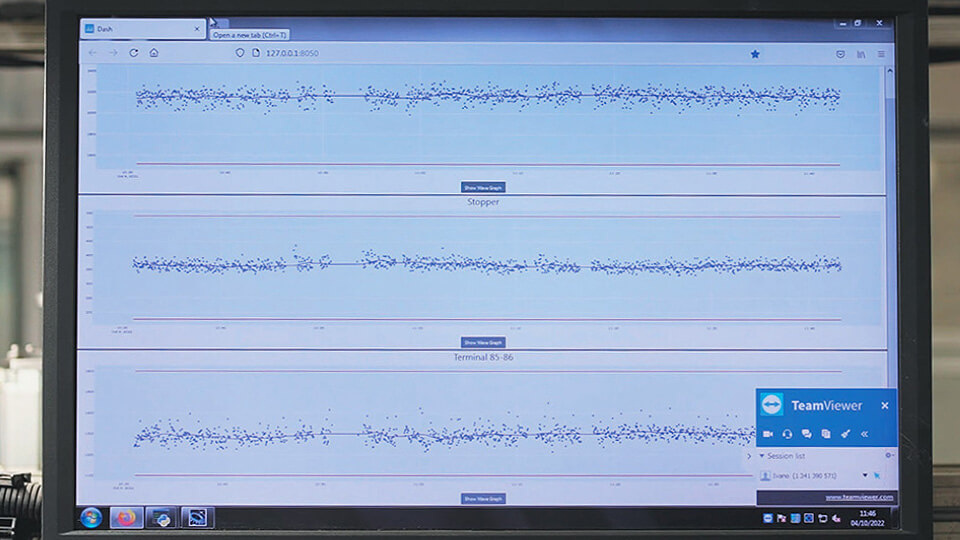
We found that data analysis is essential for achieving the goals set during the preparation phase. The data services team at i-BELT, based in the Netherlands, remotely collected all data from each sensor. Some sensors were already installed on machines, others were installed to monitor critical manufacturing processes, including a force sensor at the tip of the claw section needed to measure the force applied to the joint. By connecting the load cell to the AI controller, A.E.I. can detect various temporal changes in cauldron force in real time and determine the level and numerical value of force that can secure a 100% quality gate. One of the greatest advantages of AI controllers is their ability to capture data synchronously with machines with millisecond precision. This means AI controllers can detect anomalies with high accuracy and provide immediate feedback. As a result, it became possible to understand the manufacturing process down to the smallest detail.
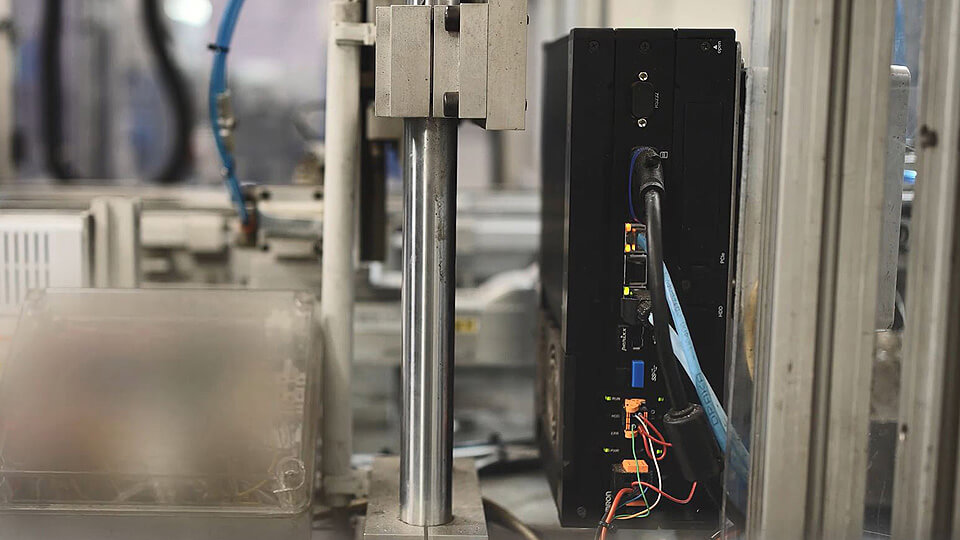
Integrating AI controllers into the process enables remote data collection
Results
Achieved 100% quality gate for assembled parts. Successfully recouped investment funds within one year while reducing waste and additional inspection costs
Cost reduction through quality control
By applying Industry 4.0 and AI technologies provided by “i-BELT” to process monitoring, analysis, validation, and validation, A.E.I. achieved all its objectives during the evaluation phase. In particular, we achieved a 100% quality gate for assembled parts, which is essential in the automotive industry. Additionally, we reduced all additional batch inspections and scrap costs at A.E.I., achieving a return on investment within 12 months.
Furthermore, regarding big data, A.E.I. now stores all measurements in a database and can reprocess them at any time. Going forward, A.E.I. plans to roll out the same approach for other products manufactured using similar processes.
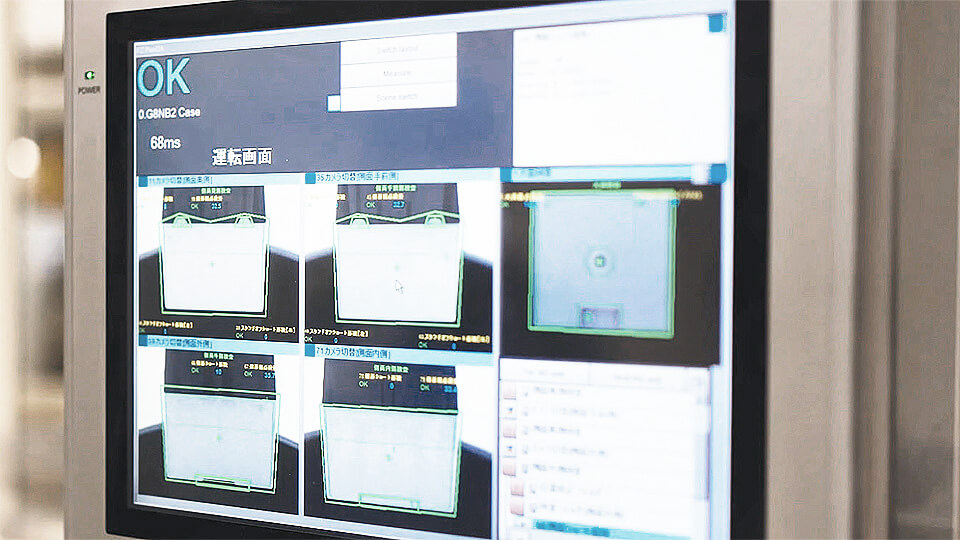
Achieved 100% quality gate in the relay quality inspection process
Reducing energy waste through sustainable manufacturing
This improvement also generates sustainable benefits such as reduced energy consumption (electricity, water, gas), shorter working hours, and the use of discarded parts and precious metals (copper, silver, brass).
These results will serve as a good example for companies aiming to improve manufacturing processes by focusing on data analytics rather than making large investments in new hardware equipment, realizing Omron’s green vision.
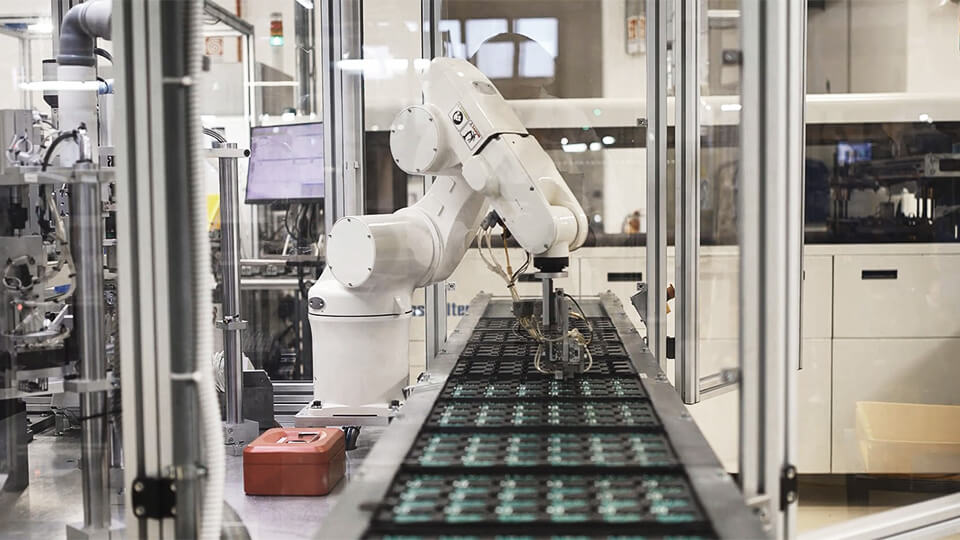
Achieving sustainable manufacturing with reduced energy consumption
Voices from the person in charge
By accurately understanding the condition of machines, appropriate countermeasures can be found when defects occur.
By introducing AI controllers into the process and building a new quality management model, we have been able to accurately understand what is happening inside the machine. Just as a doctor examines a patient, the controller detects various temporal changes in clench force and enables the identification of necessary measures to resolve issues when defects occur.
Additionally, the recent improvement has been an economic benefit, allowing you to recover your investment costs within one year. Additionally, it helps avoid wasteful energy consumption, brings benefits from the perspective of green initiatives, and realizes Omron’s corporate vision.
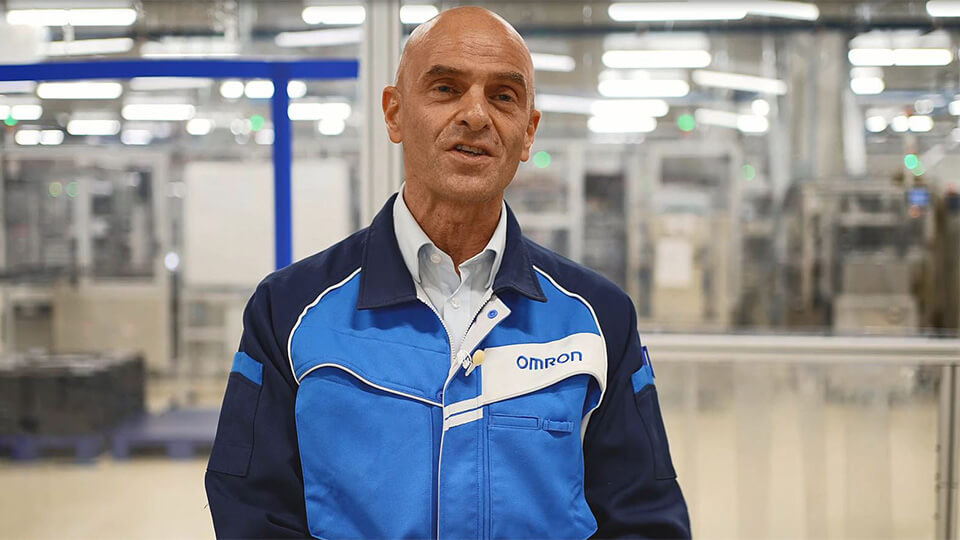
IVANO ADIUTORI, Engineer and IT Manager, Omron Automotive Electronics Italy
Reduce investment costs for new equipment through improvements through data utilization. We want to expand into other products as well.
Demands from automakers are increasing year by year, and the requirements regarding quality are particularly strict. With this data utilization, we can improve quality control methods without investing in new machines, eliminating the need for equipment replacement. This serves as a good example for companies aiming to improve manufacturing processes by focusing on data analysis.
Going forward, we plan to roll out the same method for other products manufactured using similar processes.

Hiroyuki Daito, President of Omron Automotive Electronics Italy
Implementation Solutions
"On-site Data Utilization Service i-BELT"
Omron’s extensive product lineup, know-how from in-house production sites, and the expertise of device partners are brought together through the “On-site Data Utilization Service i-BELT.”
We verify which data to focus on based on sharing customers’ current challenges, and collect and visualize the data.
Accumulated data is analyzed with proprietary expertise, and the results are converted into control algorithms to optimize the site. Even after system implementation, we continuously utilize data together with our customers, contributing to the challenge of solving issues where management and the field are united.