At the semiconductor production line at Omron Yasu Plant, we have achieved small-lot, multi-variety production by fully utilizing existing equipment to continuously create products with new functions while maintaining cost competitiveness in semiconductor and MEMS sensor* products. Against this backdrop, we took on the challenge of preventing sudden failures caused by aging equipment while minimizing investment as much as possible. Previously, the maintenance timing for vacuum pumps was determined by regular diagnostics by experienced maintenance staff and early scheduled maintenance sessions. By utilizing data, we detected signs of failure and worked to achieve optimal maintenance times.
The trigger was receiving a diagnosis for the “On-site Data Utilization Service i-BELT.” “We want to avoid sudden equipment failures that could lead to product disposal, but keep investment to a minimum”—this wish has been realized through on-site know-how, data conversion through sensing, and vibration analysis technology.
*MEMS: Micro Electro Mechanical Systems Devices with micron-level structures that integrate sensors, actuators, and electronic circuits of mechanical components onto semiconductor silicon or glass substrates, also called “micromachines”
Challenges
Equipment maintenance shifts from "regular" to "when necessary." Optimizing maintenance timing through CBM* amid a decline in skilled staff.
The shift from mass production of similar models to small-lot, multi-variety production has progressed, and the maintenance cycles previously set are no longer optimal. Moreover, as the number of skilled security workers skilled in detecting equipment abnormalities decreases, wasted costs and sudden breakdowns due to excessive maintenance are increasing. In response to these challenges, the challenge was to implement CBM, which utilizes data to detect failure signs and perform maintenance at the optimal timing.
*CBM: Condition Based Maintenance (Perform maintenance only when deemed necessary)
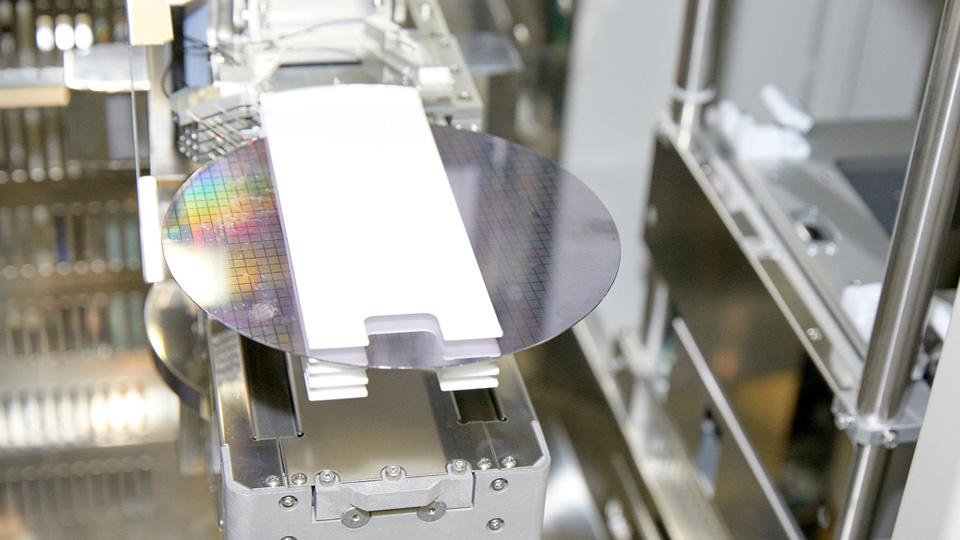
Sudden failures in semiconductor production lines pose risks of product (wafer) disposal.
Solution
CBM Conversion of Vacuum Pumps by Utilizing Vibration Data
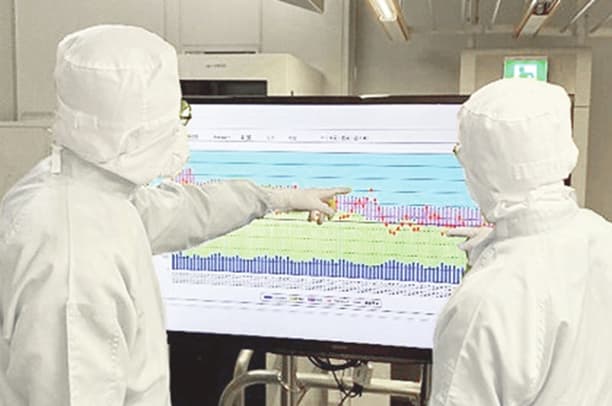
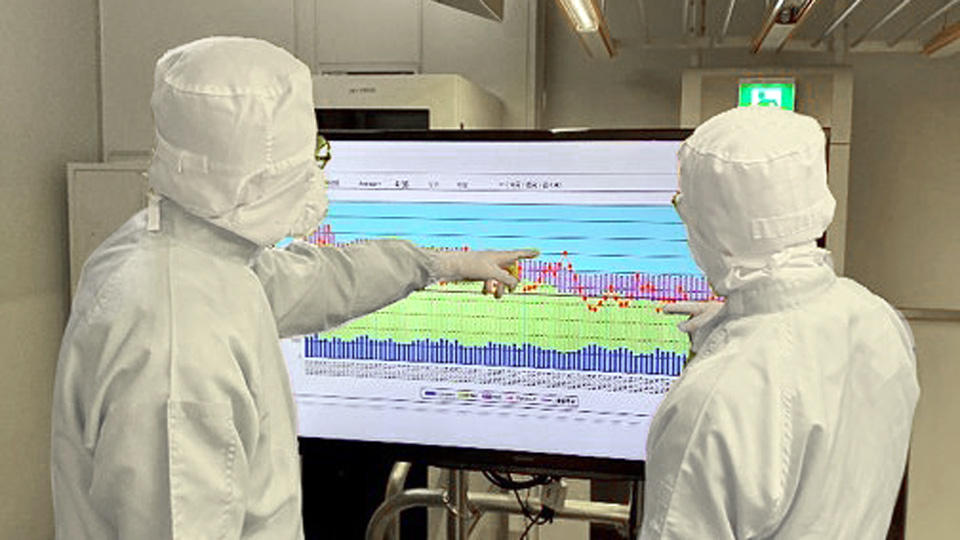
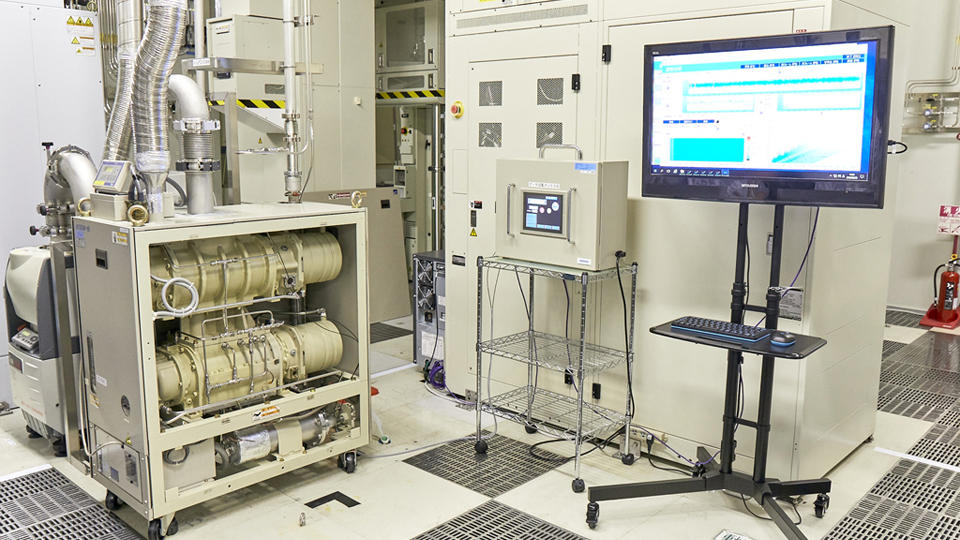
Vacuum pumps in film formation equipment, which are widely used in semiconductor production lines, risk sudden shutdowns as reactive gases flow in and the accumulation of products, leading to the risk of many wafers being discarded, so maintenance frequency has been increased. Therefore, we believed that successful CBM conversion would be highly effective for vacuum pumps for film deposition equipment, and began continuous monitoring of vibration data by installing vibration sensors. Using data from vibration sensors and vibration analysis technology, it converts and monitors multiple features in real time. Optimizing sensor mounting positions, extracting effective features, and optimizing threshold settings are key to success. By combining the expertise of experienced security personnel with Omron’s vibration analysis equipment and technology, we worked to fine-tune individual differences and enhance reliability.
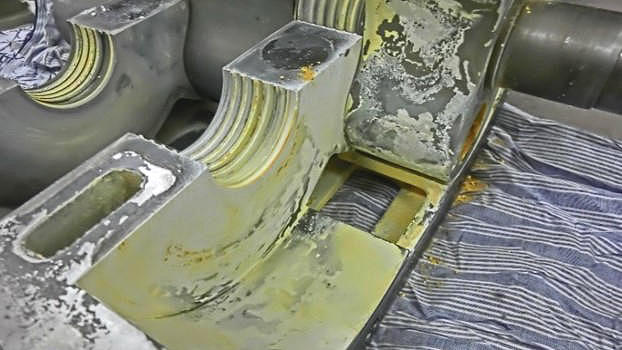
Products deposited inside the pump
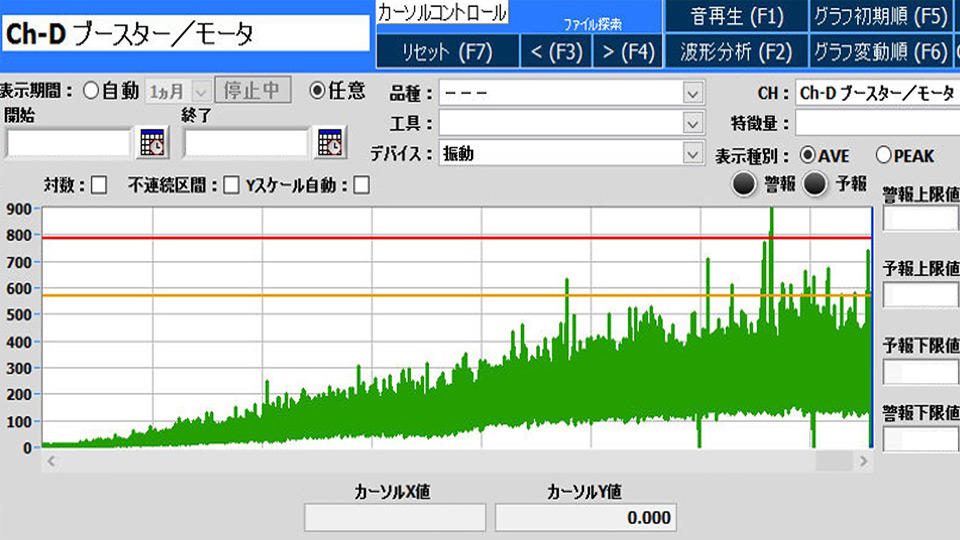
Characteristics that capture changes inside the pump
Results
Zero sudden failures, 15% reduction in maintenance costs
By predicting vibration data, we succeeded in extending the vacuum pump maintenance interval by more than 30%. By extending maintenance cycles without sudden breakdowns, overhaul costs can be reduced, resulting in maintenance cost reductions of over 15%. By balancing risk reduction and cost reduction, we have made significant progress toward fully realizing CBM, a long-held dream of the equipment maintenance division.
Key Points of Initiatives
Point 1 - Identifying On-Site Issues and Determining Areas for Address
CBM adoption is an ideal in the maintenance field, but practical application has not been achieved yet. Until now, we have relied on the judgment of experienced and experienced maintenance personnel, responding through intermittent monitoring and regular maintenance of equipment.
However, fluctuations in production volume and changes in product varieties cause significant fluctuations in optimal maintenance timing, making it difficult to balance maintenance cycle optimization with the risk of sudden failures. Additionally, the decline in skilled workers has become a major issue, making it urgent to implement CBM systems to optimize maintenance timing.
Among these, vacuum pumps for film formation equipment, which carry a high risk of wafer waste due to sudden shutdowns, require increased maintenance frequency, so we believed that successful CBM conversion would be highly effective.
Point 2 - Data Collection
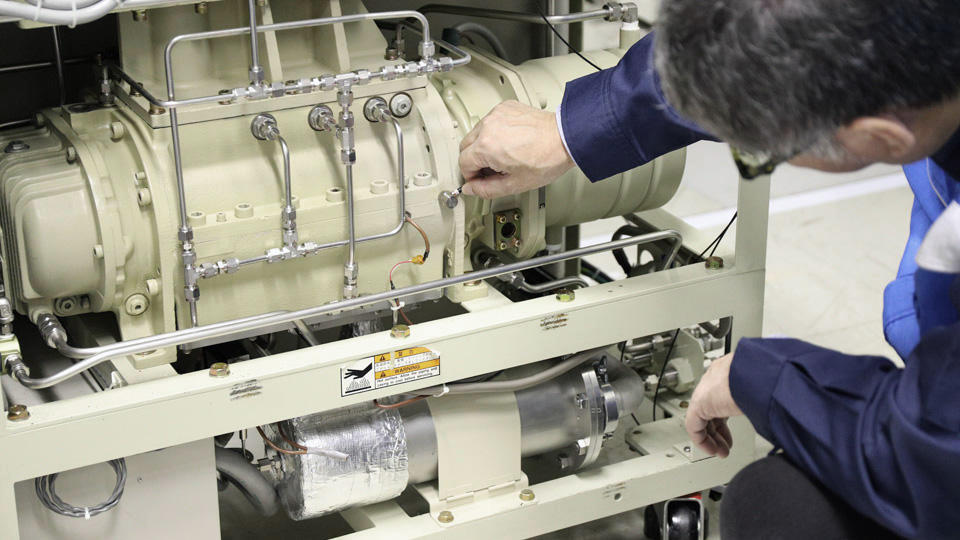
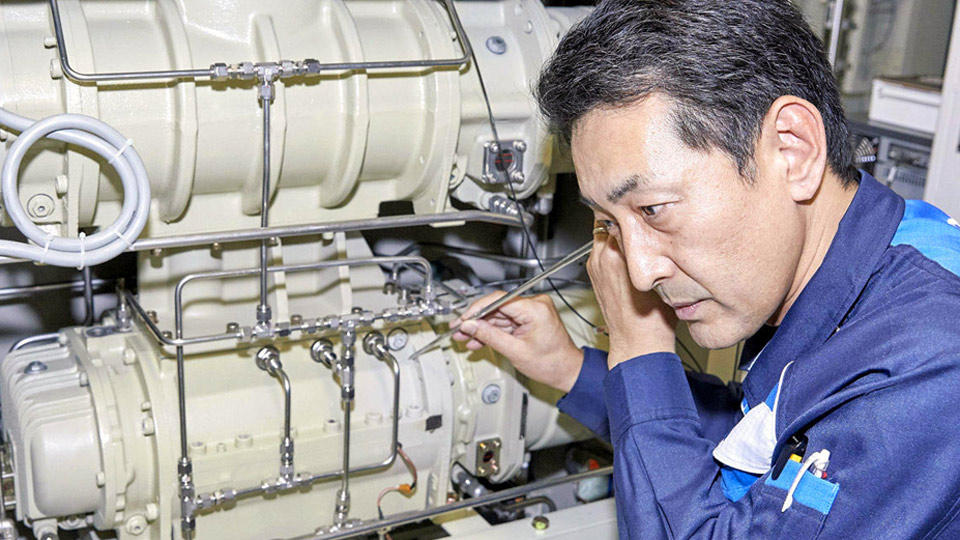
Are you familiar with stethoscopes? Skilled medical staff use stethoscopes to listen to sounds, allowing them to distinguish vibration changes caused by deposits inside the pump. If this technique can be digitized and a highly accurate judgment algorithm established, CBM integration can be realized. Based on the craftsmanship, we determined the mounting position and method for the vibration sensor and began collecting data.
Point 3 - Visualization and Analysis
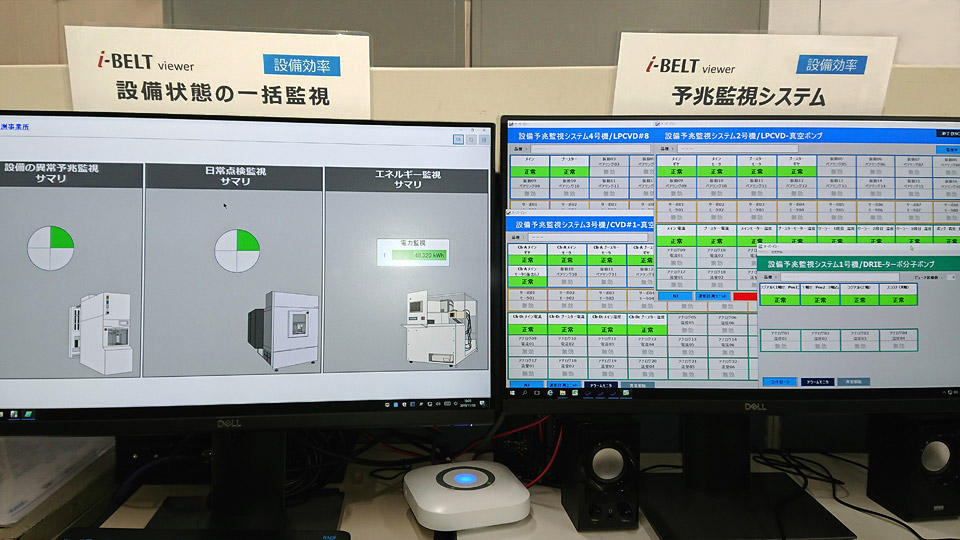
We analyzed vibration data from vacuum pumps in real time, converted them into various features, and visualized them. By experimentally acquiring and analyzing data from pumps with different operating periods, we identified features that could be used for monitoring. We adjusted the optimal position and method for sensor mounting to more reliably capture changes.
Point 4 - Initiatives Aiming for Full CBM Implementation
To fully implement CBM, we first extended maintenance intervals by 30% while monitoring. Based on the analysis of the data obtained here, engineers and the field co-create more accurate predictive signs.
Voices from the person in charge
CBM adoption has been a long-held dream
Especially in semiconductors, as the equipment industry suggests, even relatively small factories like the Yasu plant have over 200 vacuum pumps, and if these suddenly shut down, many of these can lead to massive product waste. Shortening maintenance intervals to avoid sudden breakdowns increases both the cost and effort involved.
Also, recently, product types and quantities have fluctuated rapidly, and maintenance periods previously set for too long have led to sudden failures. Going forward, we aim to further enhance CBM technology by utilizing data from various sensors, not limited to vibration.
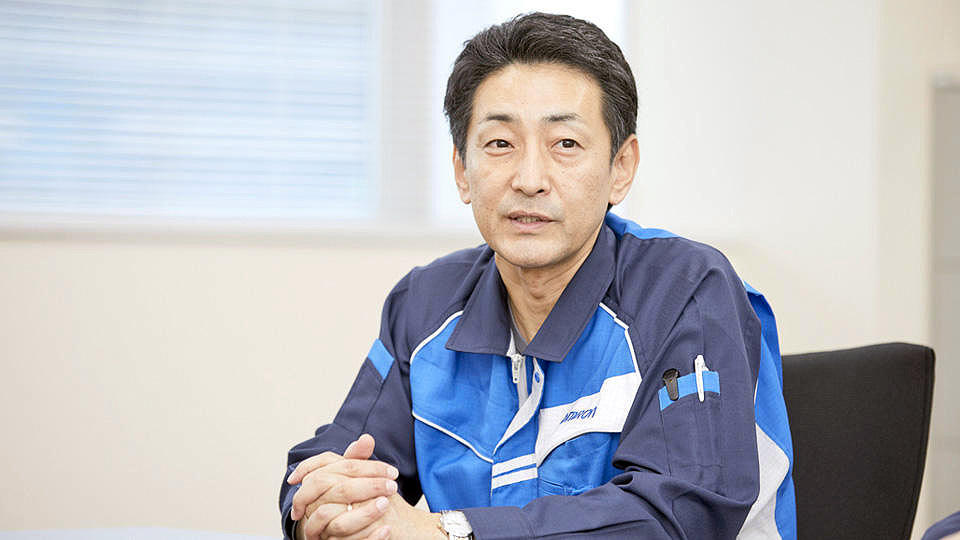
Norikazu Goto
Omron Corporation, Business Development Headquarters, MEMS Development Production Center, Production Department, Production Section 1, Senior Grade Machinery Maintenance Technician
We want to "visualize" and pass on the knowledge, experience, and technology we have accumulated in equipment maintenance so far.
Omron has accumulated over 20 years of conservation records, along with valuable knowledge, experience, and conservation skills from members who have carried out conservation operations. Losing these is a significant loss not only for our company but also for the semiconductor industry.
This time, we built a CBM-based system from vibration and vacuum pumps. We accumulate maintenance information held by other devices in this system and work on digitalization and visualization within our department. We hope that this technology will be introduced to customers through the “On-site Data Utilization Service i-BELT” as a technology to be inherited.
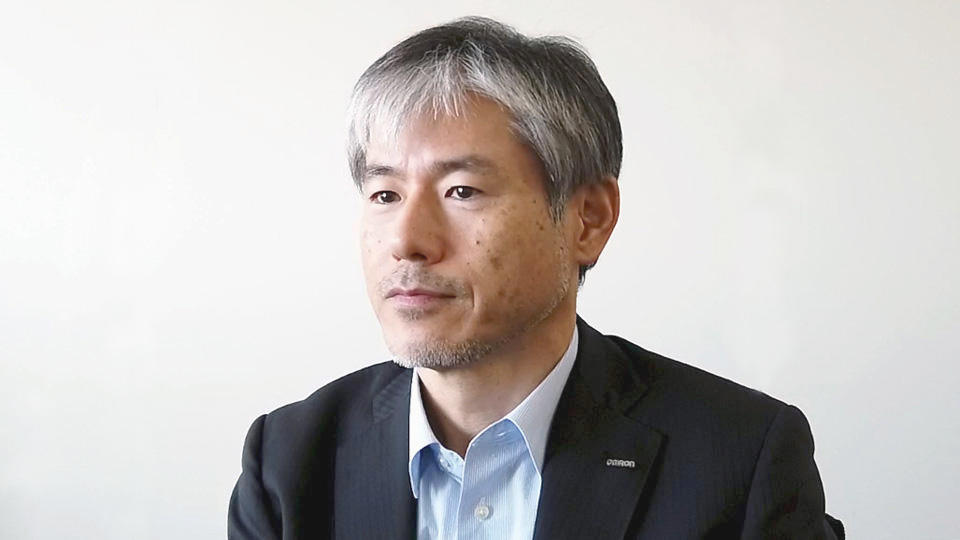
Satoshi Nakamura,
Manager, Production Section 1, Production Department, MEMS Development Center, Business Development Headquarters, Omron Corporation
Implementation Solutions
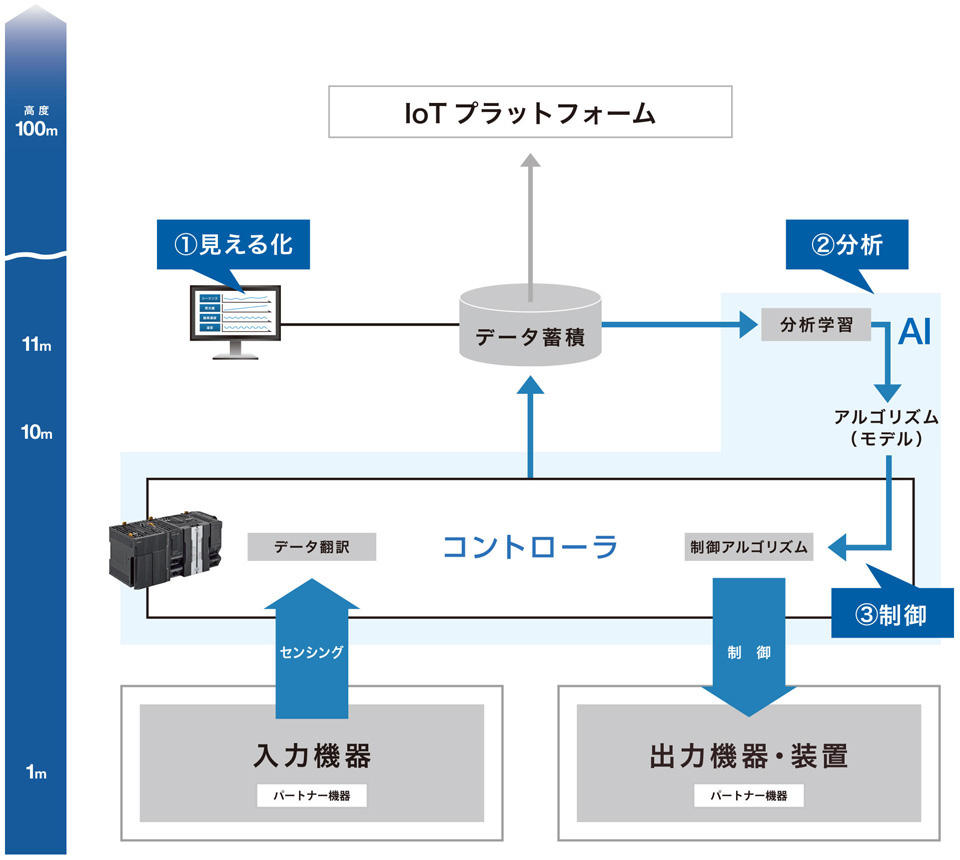
"On-site Data Utilization Service i-BELT"
Omron’s extensive product lineup, know-how from in-house production sites, and the expertise of device partners are brought together through the “On-site Data Utilization Service i-BELT.”
We verify which data to focus on based on sharing customers’ current challenges, and collect and visualize the data.
Accumulated data is analyzed with proprietary expertise, and the results are converted into control algorithms to optimize the site. Even after system implementation, we continuously utilize data together with our customers, contributing to the challenge of solving issues where management and the field are united.